
sentry_link 0.1.2  sentry_link: ^0.1.2 copied to clipboard
 sentry.io
Automatic capture of exceptions and GraphQL errors for the gql eco-system, like graphql and ferry
Sentry Link (GraphQL) #




Compatibility list #
This integration is compatible with the following packages. It's also compatible with other packages which are build on gql suite of packages.
| package | stats |
|---|---|
gql_link |
   |
graphql |
   |
ferry |
   |
artemis |
   |
Usage #
Just add SentryLink.link() and/or SentryTracingLink to your links.
It will add error reporting and performance monitoring to your GraphQL operations.
final link = Link.from([
    AuthLink(getToken: () async => 'Bearer $personalAccessToken'),
    // SentryLink records exceptions
    SentryLink.link(),
    // SentryTracingLink adds performance tracing with Sentry
    SentryTracingLink(shouldStartTransaction: true),
    HttpLink('https://api.github.com/graphql'),
]);
In addition to that, you can add GqlEventProcessor to Sentry's event processor, to improve support for nested LinkExceptions and its subclasses.
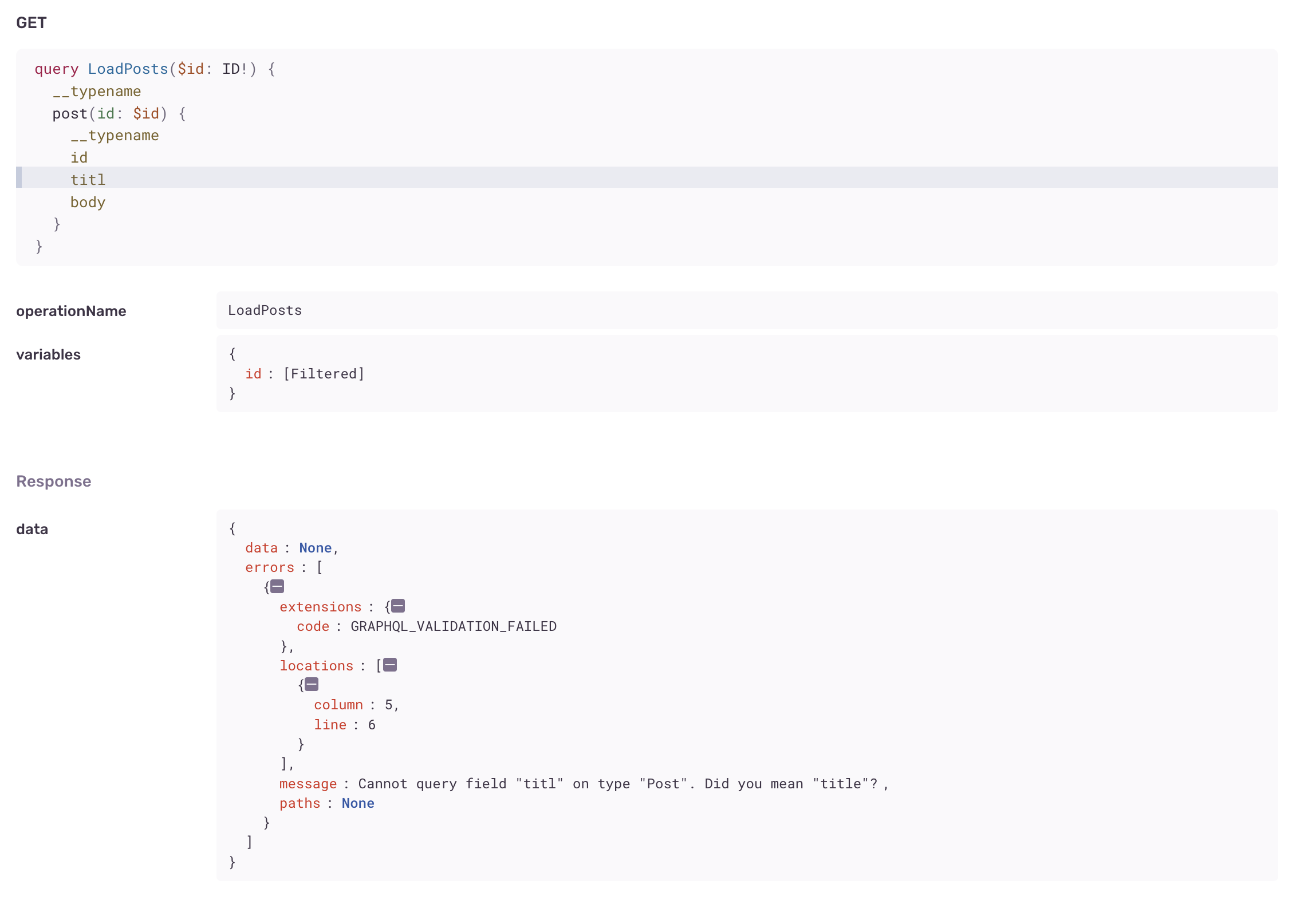
A GraphQL error will be reported like the following screenshot:
SentryBreadcrumbLink #
The SentryBreadcrumbLink adds breadcrumbs for every succesful GraphQL operation. Failed operations can be added as breadcrumbs via SentryLink.link().
SentryResponseParser and SentryRequestSerializer #
The SentryResponseParser and SentryRequestSerializer classes can be used to trace the serialization process.
Both classes work with HttpLink and DioLink.
When using the HttpLink, you can additionally use the sentryResponseDecoder function.
HttpLink example #
import 'package:sentry_link/sentry_link.dart';

final link = Link.from([
    SentryLink.link(),
    AuthLink(getToken: () async => 'Bearer $personalAccessToken'),
    SentryTracingLink(shouldStartTransaction: true),
    HttpLink(
      'https://api.github.com/graphql',
      httpClient: SentryHttpClient(networkTracing: true),
      serializer: SentryRequestSerializer(),
      parser: SentryResponseParser(),
    ),
  ]);
DioLink example #
This example also uses the sentry_dio integration.
import 'package:sentry_link/sentry_link.dart';
import 'package:sentry_dio/sentry_dio.dart';

final link = Link.from([
    SentryLink.link(),
    AuthLink(getToken: () async => 'Bearer $personalAccessToken'),
    SentryTracingLink(shouldStartTransaction: true),
    DioLink(
      'https://api.github.com/graphql',
      client: Dio()..addSentry(networkTracing: true),
      serializer: SentryRequestSerializer(),
      parser: SentryResponseParser(),
    ),
  ]);
HttpLink
Bonus HttpLink tracing #
import 'dart:async';
import 'dart:convert';

import 'package:sentry/sentry.dart';
import 'package:http/http.dart' as http;

import 'package:sentry_link/sentry_link.dart';

final link = Link.from([
  SentryLink.link(),
  SentryTracingLink(shouldStartTransaction: true),
  AuthLink(getToken: () async => 'Bearer $personalAccessToken'),
  HttpLink(
    'https://api.github.com/graphql',
    httpClient: SentryHttpClient(networkTracing: true),
    serializer: SentryRequestSerializer(),
    parser: SentryResponseParser(),
    httpResponseDecoder: sentryResponseDecoder,
  ),
]);

Map<String, dynamic>? sentryResponseDecoder(
  http.Response response, {
  Hub? hub,
}) {
  final currentHub = hub ?? HubAdapter();
  final span = currentHub.getSpan()?.startChild(
        'serialize.http.client',
        description: 'http response deserialization',
      );
  Map<String, dynamic>? result;
  try {
    result = _defaultHttpResponseDecoder(response);
    span?.status = const SpanStatus.ok();
  } catch (e) {
    span?.status = const SpanStatus.unknownError();
    span?.throwable = e;
    rethrow;
  } finally {
    unawaited(span?.finish());
  }
  return result;
}

Map<String, dynamic>? _defaultHttpResponseDecoder(http.Response httpResponse) {
  return json.decode(utf8.decode(httpResponse.bodyBytes))
      as Map<String, dynamic>?;
}
📣 About the author #


Metadata
Publisher
Weekly Downloads
Metadata
Automatic capture of exceptions and GraphQL errors for the gql eco-system, like graphql and ferry
Repository (GitHub)
View/report issues
Funding
Consider supporting this project:
github.com
www.buymeacoffee.com
License
 unknown (license)
Dependencies
gql, gql_error_link, gql_exec, gql_link, sentry

