
reactive_orm 0.0.7  reactive_orm: ^0.0.7 copied to clipboard
A reactive object-relationship state management layer for Flutter with fine-grained field reactivity.
reactive_orm #


⚠️ Note:
reactive_ormstands for a Reactive Object–Relationship Model.
It is not a database ORM.
It is a lightweight, field-level state management solution for Flutter UI, inspired by ORM-style modeling of objects and relationships — fully in-memory and UI-focused.
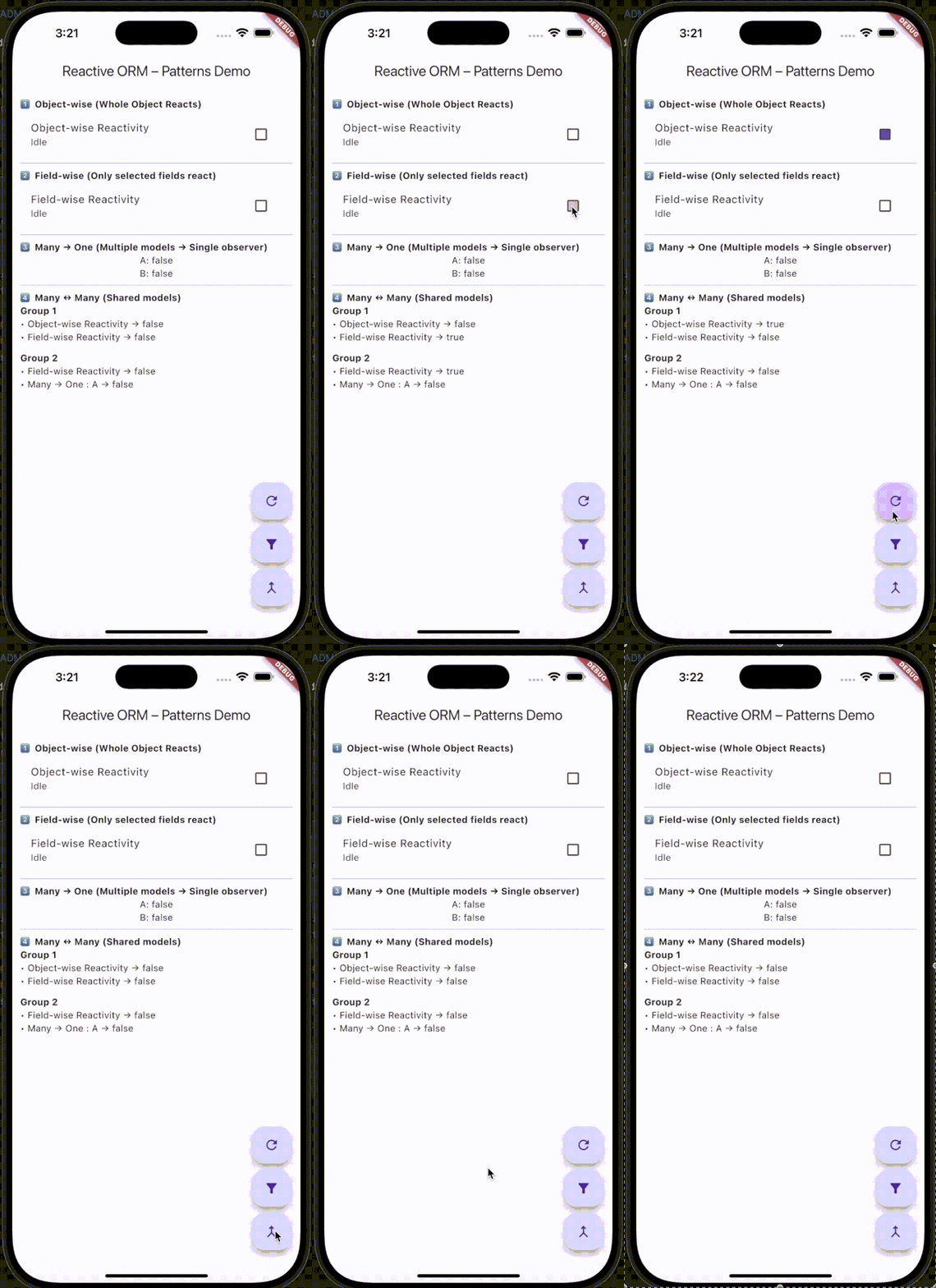
🎬 Demo #
✨ Core Philosophy #
- Models are plain Dart objects
- State changes happen via normal field mutation
- UI reacts automatically, with optional field-specific reactivity
- No
ChangeNotifier, providers, streams, or extra boilerplate - Supports object-wise, field-wise, and nested reactivity
- ORM-inspired design:
- Objects represent application state
- Relationships define propagation (Many → One, Many ↔ Many)
- Reactivity keeps the UI in sync
✨ Features #
- ✅ Reactive models with automatic UI updates
- ✅ Object-wise reactivity (entire model rebuilds)
- ✅ Field-wise reactivity (only selected fields rebuild)
- ✅ Nested & shared models supported
- ✅ Many → One and Many ↔ Many relationships
- ✅ Multiple widgets can listen to the same model
- ✅ Minimal boilerplate
- ✅ ORM-style mental model (Objects + Relationships)
🆚 Comparison #
| Feature | ValueNotifier | reactive_orm |
|---|---|---|
| Observes a single field? | Yes (one notifier per field) | Yes (field-wise) + whole object |
| Field assignment syntax | notifier.value = newValue |
model.field = newValue (auto-notifies) |
| Multiple widgets listening | Manual wiring | Automatic |
| Nested models | Manual | Built-in (addNested) |
| Relationships | ❌ | ✅ Many → One, Many ↔ Many |
| Boilerplate | Medium → High | Minimal, ORM-style |
| Ideal for | Simple values | Complex reactive domain models |
🚀 Getting Started #
Installation #
dependencies:
  reactive_orm: ^0.0.7
🧩 Basic Usage #
1️⃣ Create a Reactive Model
import 'package:reactive_orm/reactive_orm.dart';

class Task extends ReactiveModel {
  String _title;
  bool _completed = false;
  String _status = "Idle";

  Task({required String title}) : _title = title;

  String get title => _title;
  set title(String value) {
    if (_title != value) {
      _title = value;
      notifyListeners('title');
    }
  }

  bool get completed => _completed;
  set completed(bool value) {
    if (_completed != value) {
      _completed = value;
      notifyListeners('completed');
    }
  }

  String get status => _status;
  set status(String value) {
    if (_status != value) {
      _status = value;
      notifyListeners('status');
    }
  }
}
2️⃣ Object-wise Reactivity (Whole Object)
Any field change rebuilds the widget:
final task = Task(title: "Object-wise");

ReactiveBuilder<Task>(
  model: task,
  builder: (t) => ListTile(
    title: Text(t.title),
    subtitle: Text(t.status),
    trailing: Checkbox(
      value: t.completed,
      onChanged: (v) => t.completed = v!,
    ),
  ),
);
3️⃣ Field-wise Reactivity (Optimized)
Widget rebuilds only when specified fields change:
final task = Task(title: "Field-wise");

ReactiveBuilder<Task>(
  model: task,
  fields: ['completed', 'status'],
  builder: (t) => ListTile(
    title: Text(t.title),
    subtitle: Text(t.status),
    trailing: Checkbox(
      value: t.completed,
      onChanged: (v) => t.completed = v!,
    ),
  ),
);
- Rebuilds only when
completedorstatuschanges. - Changes to other fields are ignored.
🔗 Relationship Patterns #
1-> Many → One (Aggregation)
Multiple models feed a single reactive observer:
class Dashboard extends ReactiveModel {
  final List<Task> sources;
  Dashboard(this.sources) {
    for (final task in sources) addNested(task);
  }
}

final dashboard = Dashboard([task1, task2]);

ReactiveBuilder<Dashboard>(
  model: dashboard,
  builder: (_) => Text("Dashboard updated"),
);
- ✔ Any task change updates the dashboard automatically.
2-> Many ↔ Many (Shared Models)
Same model instance used across multiple parents:
class Group extends ReactiveModel {
  final String name;
  final List<Task> tasks;

  Group({required this.name, required this.tasks}) {
    for (final task in tasks) addNested(task);
  }
}
- ✔ One task update reflects everywhere.
- ✔ No duplication or manual syncing required.
🧠 How It Works (High Level) #
- Models extend
ReactiveModel. - Field setters call
notifyListeners(fieldName)when the value changes. ReactiveBuilderwidgets listen to either:- Whole model (object-wise)
- Specific fields (field-wise)
- Nested models propagate changes upward automatically.
- Widgets rebuild safely, respecting Flutter lifecycle.
🛣 Roadmap #
- Batch updates / transactions
- Async persistence hooks
- Database adapters (optional)
- DevTools / debug inspector
- Optional code generation
🧪 Status #
- Version: 0.0.7
- Stability: Stable / suitable for prototyping and early production
- Use case: Learning, prototyping, early production experiments
📌 Summary #
reactive_orm is ideal when you want:
- Clean Dart models with fine-grained reactivity
- A Reactive Object–Relationship Model for UI state
- Object-wise and field-wise rebuild control
- Nested and shared models without manual wiring
- Minimal boilerplate with a clear mental model
- A lightweight yet scalable state management solution for Flutter apps
Metadata
Publisher
unverified uploader
Weekly Downloads
Metadata
A reactive object-relationship state management layer for Flutter with fine-grained field reactivity.
Repository (GitHub)
View/report issues
License
 unknown (license)

