
mcp_probe 0.10.2  mcp_probe: ^0.10.2 copied to clipboard
 developeryusuf.com
Conformance checks and a test harness for Model Context Protocol (MCP) servers. Runs any MCP server over stdio and asserts on its behavior from package:test. Built on dart_mcp.
0.10.2 #
harnessVersionsaid0.9.8while the package was 0.10.1, so every server this harness connected to was told the wrong client version, and every conformance report named it. A test compares the two and CI runs it, which is how this was found; it had been red since 2026-08-09.- The report a run prints keeps its indentation in the README recording. That is documentation, not behaviour, but the hierarchy is the readable part.
0.10.1 #
- The section on why to reach for this rather than the alternative now sits directly under the recording, instead of below a long explanation. Someone deciding whether to install it reads the choice before the mechanics, and the section was landing past the fold where it answered nobody.
0.10.0 #
- The README now answers, in its first screen, why to reach for this rather than the zero-dependency route or the package that already owns the category. Both answers carry the file and line, or the issue number, that a reader can check. A "reach for it when" list and a sentence on when to skip it follow, because a page that only argues for itself is not useful for deciding.
0.9.8 #
- Fix
harnessVersion, which 0.9.7 shipped stale. It read0.9.6, so a server talking to 0.9.7 was told the client was 0.9.6 and every conformance report named the wrong version.test/harness_version_test.dartexists to catch this and was red in the published archive. 0.9.7 is superseded; use this. This is the third release of this package to make the same mistake, and the cause is the same each time: the suite was run before the bump rather than after it.
0.9.7 #
- Two figures.
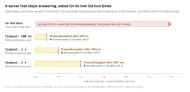
tool/rule_grid_figure.dartdraws the conformance rules against the servers that ship with this package, andtool/timeout_figure.dartdraws what the harness does when a server stops answering. Docs and tooling only.
0.9.6 #
- Add
example/server_test.dart, a working test file rather than a sketch of one. This package is a test harness, and until now nothing in the examples wrote a test:probe_demo.dartprints a conformance report, which shows the command-line half and none of the part you would actually put in your repo. The new file starts the bundled fixture server and uses all four expectation helpers, then runs the conformance suite from insidedart testand passes the rendered report as the failure reason. Five tests, about a second, anddart test example/server_test.dartruns it as it ships. - The README and the example README point at it. The bullet listing the expectation helpers had named four functions with nowhere to see them used.
0.9.5 #
Packaging only. Nothing in the library changed.
- Keep the compiled CLI out of the published archive. This package declares
an executable, and
dart build cliwrites a 5 MB binary tobuild/, a directory.gitignoredid not list. Measured on this machine: with that directory present,dart pub publish --dry-runput the binary in the package and reported a 2 MB compressed archive; with the directory ignored and the binary still on disk, the same command reports just over 300 KB. The 0.9.4 archive on pub.dev is clean, checked by listing it, because no one had rundart build cliin the tree it was published from. The defect was latent rather than shipped, and the next publish from a tree where that command had been run would have carried the binary. harnessVersionreads0.9.5, checked bytest/harness_version_test.dartafter the bump rather than before it.
0.9.4 #
- Fix
harnessVersion, which 0.9.3 shipped stale. It still read0.9.2, so a server talking to 0.9.3 was told the client was 0.9.2, andtest/harness_version_test.dart, which exists precisely to catch this, was red in the published archive. The constant was not updated with the pubspec and the suite was not re-run after the bump. 0.9.3 is superseded; use this.
0.9.3 #
- The example runs without an argument. It used to print a usage line and exit
64 unless you already had an MCP server command, which is the first thing
anyone following the Example tab on pub.dev would hit. It now probes
test/fixtures/well_behaved_server.dart, which ships in the archive, and prints a real report: handshake, negotiated protocol version, server info, four tools, twelve info-level findings and no errors. Seeing the output is most of what decides whether this package is worth adding. Passing a command works exactly as before.
0.9.2 #
-
Fix the version this harness reports to servers.
harnessVersionwas left at0.9.0when 0.9.1 went out, so every server saw the wrong client version in its logs and every conformance report named it. The test written to catch exactly this drift was red at publish time: the version bump is what turns it red, and it was run before the bump rather than after. -
Say who is behind when the protocol versions do not match. A server that speaks only a newer revision answers
initializewith it, which the specification asks it to do; the report called that "unsupported protocol version" and read as the server's fault, sending its author to look for a defect that was not there. The finding now names both sides (the version the server returned and the newest this harness speaks) and says plainly that it could not assess the server. The check still stops there, because a session that never opened cannot be probed further.
0.9.1 #
-
Declare the platforms the harness can actually run on. With no
platforms:block in the pubspec, pub.dev inferred the full set and advertised iOS. The harness starts the server under test withProcess.start, which iOS refuses outright: built against an iPhone 17 Pro simulator on iOS 26.5, the run raisedProcessException: Starting new processes is not supported on iOSfromMcpServerHarness.start. Android, Linux, macOS and Windows are now declared and iOS is not; web is excluded too, having nodart:io. Android was checked on a live arm64 Android 15 image with SELinux enforcing, where the handshake and the conformance rules pass. -
Name a repeated pagination cursor instead of only reporting that the page count ran out. A server that hands back the cursor it was given is not paginating, it is ignoring the parameter, the usual shape of a server that wires up
nextCursorwithout implementing it. The 10000-page backstop caught the symptom and reported "did not terminate after 10000 pages"; the report now says which cursor repeated and that the server is not advancing. For a tool whose product is the diagnosis, the difference is the whole point. The backstop stays for a server that keeps minting fresh cursors.
0.9.0 #
- Fix the version this harness reports to servers.
harnessVersionwas still0.1.0(it had not moved through seven releases), and it is what every server sees as the connecting client's version, and what a conformance report names. Anyone reading their server logs to see which client probed them got the wrong answer. It now tracks the package version, and a test compares the two so it cannot drift again: nothing had ever compared that constant to anything, which is why it went stale silently.
0.8.0 #
-
Fix an unhandled async error that could take down the caller's isolate. When a server process exits immediately (a wrong command, a binary that crashes on startup, a server that rejects its arguments), the next write to its stdin breaks the pipe.
startreported the failure correctly as anMcpHandshakeException, but the broken pipe surfaced separately as aSocketExceptionthat nothing observed, so a caller who caught the documented exception could still lose the isolate to an unhandled error a moment later. The harness now writes through a sink it owns and absorbs the broken pipe there, leaving exactly one catchable failure.Found by running the failure paths inside a guarded zone rather than reading them: the exception at the call site looked right, which is why an ordinary test could not see the problem.
test/dead_server_test.dartnow watches the zone for all three cases (a server that exits at once, a command that does not exist, andcheckServeragainst a dead server).
Still pinned to dart_mcp 0.5.x. Because this package's API hands back
dart_mcp types (the right shape for a conformance prober), a 1.0.0 here has
to wait for that package to stabilise, or freezing would guarantee a major bump
the moment it changes.
0.7.0 #
-
Stop shipping the test runner to consumers.
package:testwas a runtime dependency becauselib/src/matchers.dartimported it for one function,fail().package:testpulls 25 direct dependencies of its own, includinganalyzer,shelf,coverageandnode_preamble, and every one of them landed in the dependency graph of anything that depended on this package. The import is nowpackage:matcher/expect.dart, which exports the samefail()and brings five small packages, all of whichtestalready depends on. Measured on a scratch project depending on this package: 50 resolved packages before, 16 after.testmoved todev_dependencies, where it belongs.This is breaking only for a consumer that was relying on getting
testtransitively from here; declare it in your owndev_dependenciesinstead.
0.6.0 #
- Seal the exported types.
ConformanceFinding,ConformanceReport,McpServerHarnessandMcpHandshakeExceptioncarried no class modifier. A later freeze would have made every field added to a report a breaking change for anyone who had subclassed it. None is meant to be subtyped and nothing in the package, its tests or its example does.ConformanceRuleswas alreadyabstract final. No behaviour change.
0.5.1 #
- Fix
utilities/pingignoring the caller's configuredtimeout._checkPingcalledconnection.ping()with no arguments, which falls back to the 1-second default ondart_mcp'sServerConnection.ping. Any server whose ping round-trip took longer than 1 second failed this check even when it answered well inside thetimeoutpassed tocheckServerorMcpServerHarness.start. It now passesharness.timeoutthrough, matching every other request the harness makes.
0.5.0 #
- A composite GitHub Action, letting a repository gate its pull requests on MCP
conformance in a few lines:
uses: Yusufihsangorgel/mcp_probe@v1with acommand, and optionalfail-onandformat. It sets up Dart, activates the CLI, and runs the check, failing the job when a finding at or abovefail-onis present. Inputs are passed through the environment rather than interpolated into the shell, which stops a value from injecting script. The package's own CI now exercises the action against a conforming and a non-conforming fixture on every push, and a change that breaks it fails CI. - README notes a real
dart rungotcha:dart runprints a resolution line to stdout the first time, which pollutes a server launched that way. Rundart pub getbefore checking such a server. A compiled, Node or Python server has nothing to resolve.
0.4.0 #
- Machine-readable output and a configurable gate, which is what makes the CLI a
real CI step rather than something a human reads.
ConformanceReport.toJson()(andConformanceFinding.toJson()) render the report as a JSON-serializable map: the probed command, the server identity, asummarycount per severity, and the full findings list. The CLI gains--format jsonto print it and--fail-on error|warning|infoto choose the severity at which the exit code becomes 1 (defaulterror), letting a pipeline fail on a warning and capture a structured report in one run. Invalid flags exit 64 with a usage message.
0.3.3 #
- Install instructions now say
pub addinstead of pinning a version. The pinned number was stale by several releases and would have been stale again after the next one: the README ships frozen in the archive, and a hand-edited version line is wrong the moment anything is published. This one cannot go out of date.
0.3.2 #
example/probe_demo.dartprints a real report without a server of your own. It probes four servers that ship with the package: one that behaves and three that break something specific, so the output shows what a failure looks like before you have written anything to fail. The interesting one is a server that speaks the protocol correctly and is still unusable, because aprinton the way up puts a line on stdout where the transport expects only JSON-RPC. Its own tests would not catch that; what a user sees is a client that will not connect.example/README.mdcovers reading the report, pointing the probe at your own command, themcp_probe checkfront end for a pipeline, and asserting your server's actual behaviour with thetesting.darthelpers.test/readme_snippet_test.dartcompiles the snippet that README prints. It never runs, it only has to analyse, which is enough to keep a copied example from drifting away from the API it is describing.
0.3.1 #
- Declare the diagram in
pubspec.yamlso pub.dev renders it on the package page. It was already in the repository and the README, but pub.dev shows only what thescreenshots:field points at, so the page opened with prose where the picture should have been.
0.3.0 #
- Add the
utilities/pingconformance rule. MCP requires a server to answer apingrequest promptly with an empty result;checkServerand the CLI now send one and report an error if the server times out or answers with a protocol error, so a server that stops responding to liveness pings is caught.
0.2.0 #
- Add a command-line tool.
dart pub global activate mcp_probeinstalls anmcp_probe check <command> [args...]executable that runs a server over stdio, prints each conformance finding, and exits non-zero if any check reports an error. It drops into a CI step without writing any Dart.
0.1.3 #
listTools,listResourcesandlistPromptsnow follownextCursorpagination and return every page combined. Previously only the first page was fetched. A conformance run against a paginated server validated just those items and could report the server green without ever seeing the rest.
0.1.2 #
- Docs: tightened the README wording and visuals.
0.1.1 #
- Expand the package description to name what the package does in the words people search for. No code changes.
0.1.0 #
- Initial release.
McpServerHarness: runs an MCP server as a child process over stdio, with per-request timeouts and guaranteed process cleanup.checkServerandConformanceReport: conformance rules for the initialize handshake, declared capabilities, tool definitions, and JSON-RPC error behavior, with Markdown rendering.package:testhelpers in thepackage:mcp_probe/testing.dartentrypoint:expectToolExists,expectToolCallSucceeds,expectToolCallFails,expectResourceExists.
Metadata

Documentation
Publisher
Weekly Downloads
Metadata
Conformance checks and a test harness for Model Context Protocol (MCP) servers. Runs any MCP server over stdio and asserts on its behavior from package:test. Built on dart_mcp.
Repository (GitHub)
View/report issues
Topics
#mcp #testing #ai #server #conformance
License
 MIT (license)